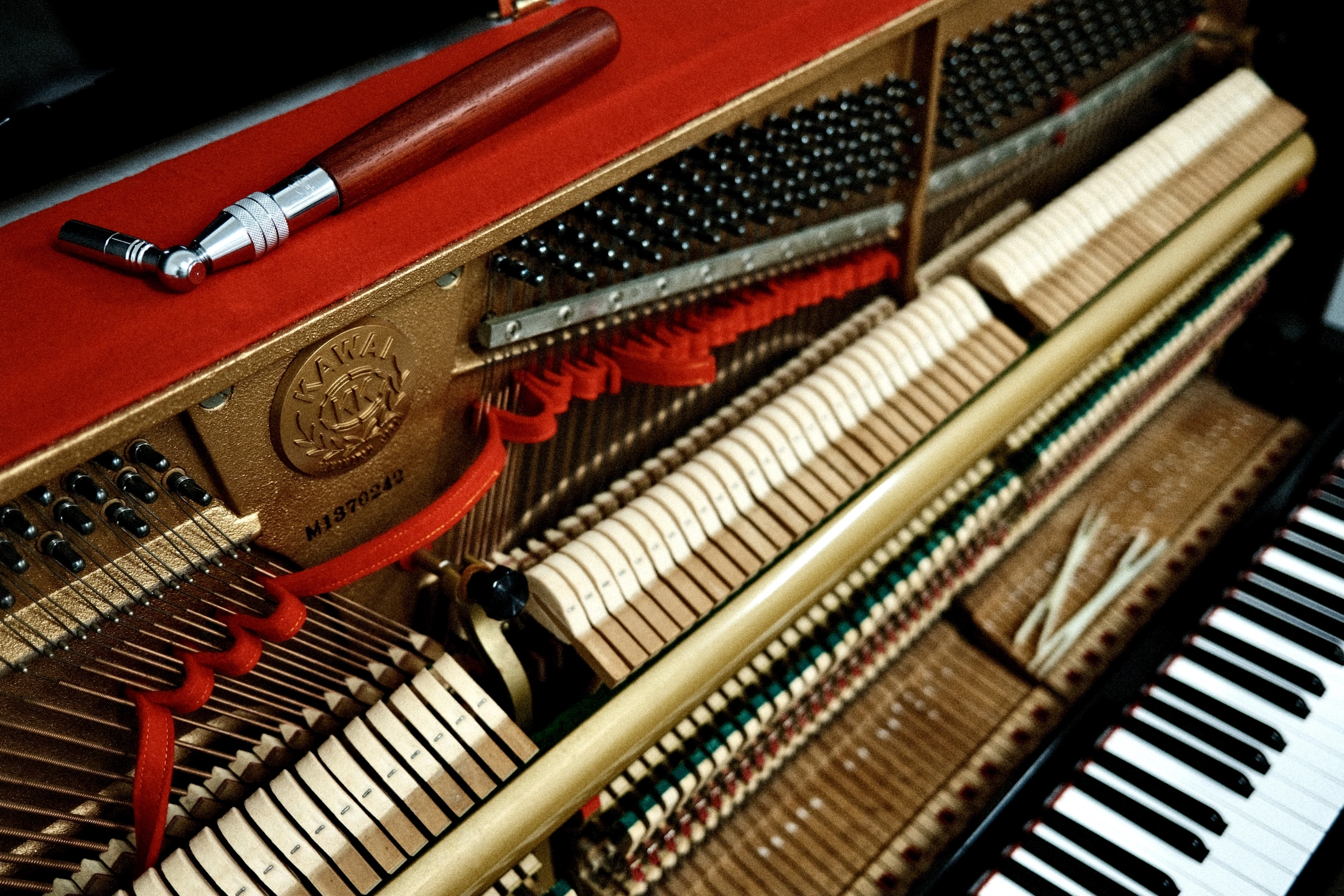
Piano Tuning and Servicing for Tasmania
Nothing is better than a finely tuned and regulated piano; it is like an extension of a human! Why put up with something that's not as good as it can be? Book now to have your piano put in its best condition - the condition you deserve - and enjoy playing without restriction!
Regular Piano Tuning - $250
For pianos tuned annually, or more frequently.
Helping your piano to sound its best so that you can relax, unwind, and simply enjoy playing without distraction!
Catch Up Tuning - $350
For pianos that have missed a few tunings.
Bringing your piano back to or better than its former glory! Includes pitch raising and often minor regulation to help your piano sing to its full potential.
Regulation, Repairs, and Cleaning - From $50
Dust collecting? Sticky keys? Odd notes?
Get in contact today for diagnosis and treament. Can vary from a 'stuck' note or polish to full action rebuild. A quote will always be provided prior to work commencing.
Follow us on instagram @pianomayt
Testimonials
Contact
Frequently Asked Questions
I combine aural techniques with the use of electronic tuning devices (ETDs) to deliver the best possible tuning for each individual piano. The art of piano tuning has been refined over centuries, and while ETDs provide valuable information about pitch and frequency, they are only tools. A technician’s ear, experience, and understanding of harmonics, temperament, and tone are vital when creating a beautifully tuned piano.
I use an ETD for tasks like performing pitch raises and checking the initial scale, but the majority of my tuning is done by ear. For example, setting the temperament—how notes blend across the piano—is something I use the ETD to assist with but always evaluate aurally, drawing on techniques and checks developed by experienced technicians such as Rick Baldassin and Jason Cassel. The tuning of unisons, where multiple strings for a single note must resonate perfectly together, is especially reliant on the tuner's aural skills, as ETDs cannot fully capture subtle issues like false beats.
Finding the perfect balance between the science and the art of making a piano sound at its best is key. While ETDs enhance speed and precision, every piano has its unique voice, and only by listening and evaluating carefully can I ensure that it sounds its best. The blend of technology and aural skill allows me to deliver exceptional results to every piano.
Temperature & Humidity Changes: Pianos contain thousands of wood and felt components which expand and contract with changes in temperature and humidity. This causes the soundboard (the large wooden piece that amplifies sound) to expand or contract, thereby impacting string tension. In Tasmania’s varied climate, shifts between cold wet winters and hot dry summers will affect tuning, as will having the heat pump turned off and on, or having the piano in front of an open window. Tuning annually helps to offset these natural fluctuations and will keep your piano in its best condition.
String Tension Changes: Each piano has ~230 strings, each held under very high tension (up to around 90kg per string), which can add up to ~20 tonnes of combined force. Even slight changes in tension can cause the piano to go out of tune, especially after the initial stretching of new strings or following repairs. Regular tuning helps maintain stability and prevents the piano from drifting too far off pitch.
Usage Wear: Frequent playing causes wear and slight shifts in tension, especially in the strings and tuning pins. Over time, this can cause unevenness in tone and shifts in pitch. Pianos in professional or heavily-used environments such as schools often need even more frequent tuning, such as every six months or before exams or concerts, but even lightly used pianos benefit from yearly maintenance due to environmental and tension changes.
Aging Materials: Pianos, like all mechanical instruments, change slightly with age. Felt hammers compress, wooden components shift, and strings wear down. Regular tuning and servicing ensures that these changes don’t compromise the piano's sound quality over time and help to solve small problems before they progress to large problems.
Maintaining Pitch (A440 Hz): If a piano isn’t tuned regularly, it can drift a long way flat from standard pitch (A440 Hz). The longer it stays out of tune, the harder it becomes to restore proper pitch, sometimes requiring multiple consecutive tunings or a complete pitch raise to regain stability. Regular tuning ensures the instrument stays close to the ideal pitch, making future tunings easier and more stable, and helping the piano to continue resonating at its best.
Pianos are comprised of many components that are subject to aging and degredation. Prior to commencing a catch-up tuning, a detailed inspection is performed on the piano. Is there rust on the pins or strings? Are the screws tight? Are there cracks in the bridge or soundboard?
Pianos that have not been tuned regularly are more likely to have undiagnosed problems and also require a pitch raise before normal tuning can be performed. This means that each string needs to be tuned a minimum of three times, sometimes four, to ensure that the tuning remains stable. There is also a greater risk that a piano string that has been static for years will break during tuning due to imbalance of tension, weakening of the metal, and rust.
You could have a go, certainly, however it is not recommended. It is possible to irreparably damage a piano through use of improper tuning techniques. Strings can be overpulled, pins can be bent, and other delicate parts of the mechanism can be broken resulting in replacement parts and costly repairs being necessary. Setting the temperament of a piano and tuning perfect unisons, not to mention the hammer techniques involved in getting the tuning stable, are all quite difficult to master. If you do decide to tune your own piano and are not happy with how it goes, get in contact and I will be happy to come and tune it for you!
There are a few things that you can do before and during the tuning to help expedite the process and ensure best results:
Please remove all items from the top of your piano
Please keep noise to a minimum to ensure that all frequencies from your piano strings can be heard and tuned accurately. The quieter the surrounds, the better the tuning.
Please keep the room at the temperature that it would usually be. The components of a piano expand and contract with changes of temperature/humidity and can take hours to settle. If the piano is still adjusting to its new environment as it is being tuned, the result will be an unstable tuning. For example, if a room is heated after being cool, the metal components (such as the strings) will gradually expand resulting in varying lowering of pitch. Simultaneously, the wooden components (such as the soundboard and bridge) will decrease in size due to a decrease in humidity, resulting in a lowering of string tension and subsequent drop in pitch.
About Piano MayT
Pianos are complex and wonderful instruments that are just as individual and varied as humans. Comprised of over 10,000 finely assembled and maintained parts, and ~230 strings; what is right for one piano may not be right for the next. This is where the fine balance between the science and art of piano tuning and technician work meets, making sure that your piano sounds and plays at its best – and just how you want it to!
My journey into the world of Piano Tuning and Technician work commenced in 2023, when I was fortunate to be awarded a scholarship from the Tasmanian Symphony Orchestra to study in Sydney. Under the guidance of Keven Jenkinson (ARPT, RPT) and numerous other experienced piano technicians and tuners, I have delved in to the wonderful world of the physics of sound and tuning, the inner workings of the piano, voicing, regulation and touch, repairs, and much more.
Although I am comparatively new to the professional piano industry, I have been truly immersed in music for my entire life which has led to a deep appreciation of the desired sounds and attributes of an instrument. Born into a musical family, I’ve been playing since before I could walk (see picture below!). During my school years, I was fortunate enough to receive a music scholarship to Ballarat Grammar and here I went on to complete Grade 8 AMEB Pianoforte with Credit at 15. Along the way, I picked up a few other instruments—French horn, pipe organ, and a variety of brass—and earned my AMusA in French horn at the age of 19.
Since leaving school, I have maintained a strong involvement in community music, regularly playing with numerous bands and orchestras and having the opportunity to tour China and New Zealand, as well as mainland and local sites, on musical ventures. I regularly play in the UTas Wind Orchestra and the City of Launceston RSL Brass Band, as well as in pit orchestras as the opportunity arises.
At Piano MayT, my goal is simple: to combine the art and science of piano tuning and technician work to make sure that each instrument sounds and plays in the exact way that the pianist desires! Years of playing and performing have finely honed my ears and understanding of how important it is to listen to both the piano and the pianist to help create the ultimate sound and touch so you can enjoy playing without restriction or distraction!
Please get in contact; I would love to hear from you and be a part of your musical journey!
May Thomas